

Education · 22 October 2026
Why Is the Gold Market Moving So Slowly?
Why is Gold (XAUUSD) moving so slowly despite ongoing political uncertainty in the United States? Explore how the 2026 U.S. midterm elections, public confidence in the Trump administration, inflation concerns and Federal Reserve expectations may be influencing current gold market conditions.
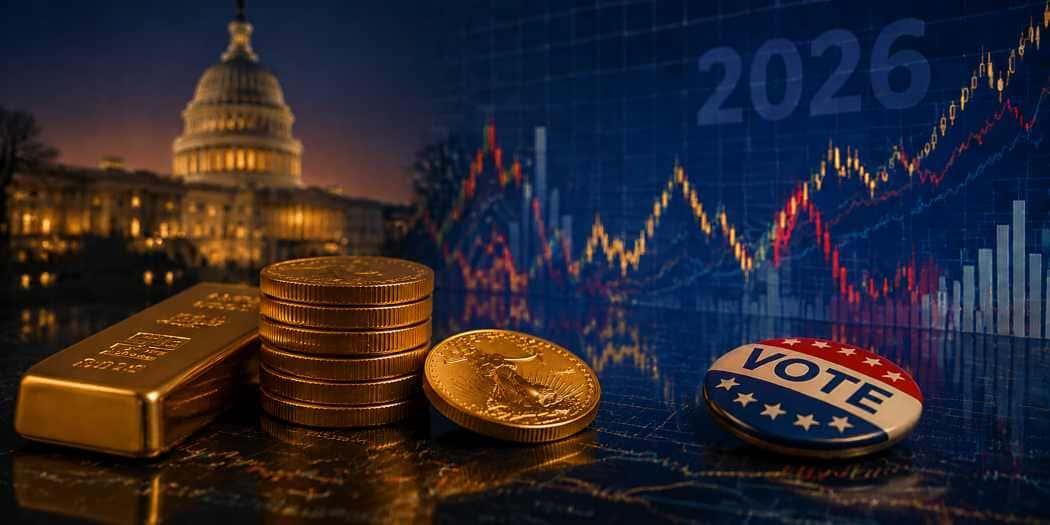
Gold traders are used to sudden price movements when political tensions rise or major economic news is released. However, political uncertainty does not always translate into immediate movement in Gold (XAUUSD). As the United States approaches its midterm elections on November 3, 2026, investors are watching President Donald Trump’s approval ratings, economic policies and the potential political consequences of the election. At the same time, inflation concerns and expectations surrounding the Federal Reserve are influencing the gold market.
1. The 2026 U.S. Midterm Elections
The 2026 U.S. midterm elections will determine the balance of power in Congress, including control of the House of Representatives and the Senate. These elections are important because the outcome could affect the administration’s ability to advance its economic policies, spending plans, trade measures and foreign policy agenda. Markets may become more sensitive to political developments as election day approaches. However, traders often wait for clearer information about the likely outcome and its economic consequences before making significant changes to their positions.
2. Is Donald Trump Still Getting the Trust of Americans?
Public confidence in President Trump has become an important political issue ahead of the midterms. A Pew Research Center survey conducted from September 28 to October 4, 2026, found that 30% of Americans approved of Trump’s performance as president, while 68% disapproved. The economy was also a major concern among voters. These figures suggest that public support for the president is under pressure. However, approval ratings do not tell the entire story: voters may evaluate economic performance, foreign policy and political leadership differently. For financial markets, the important question is how political developments could influence future policies. Changes in congressional control could affect fiscal spending, trade policy and government decision-making, potentially creating new sources of uncertainty for investors.
3. The Political View: Why Politics Does Not Always Move Gold
rom a political perspective, the upcoming election creates uncertainty about the future direction of U.S. policy. Some investors may seek defensive assets when political risks increase, while others may prefer to wait until the outcome becomes clearer. However, political uncertainty alone is not enough to guarantee a strong move in gold. Investors also consider interest rates, the U.S. dollar, Treasury yields and inflation. If these factors offset demand for safe-haven assets, gold may remain within a relatively narrow trading range despite significant political headlines. In other words, political news may attract attention without immediately changing the balance of buying and selling in the gold market.
4. Why Has Gold Been Moving Slowly?
Several factors may help explain the current market conditions. Conflicting economic pressures Gold has recently faced pressure from rising oil prices and concerns about inflation. Higher energy costs can increase expectations that interest rates may need to remain elevated, making interest-bearing assets more competitive with gold, which does not pay interest. The U.S. dollar and Treasury yields A stronger dollar can make gold more expensive for buyers using other currencies. Higher Treasury yields can also increase the opportunity cost of holding gold. These factors have contributed to pressure on gold prices in recent months. Waiting for the Federal Reserve The Federal Reserve’s October 27–28 policy meeting is another important event on investors’ calendars. Traders may be cautious while assessing the potential implications for interest rates and the economic outlook. Political uncertainty is already being considered Markets do not wait until election day to respond. Investors continuously assess polls, policy announcements and economic data. By the time an event occurs, some of its potential implications may already be reflected in prices. As a result, the market may appear quiet even when the underlying news environment remains active.
5. What Traders Should Understand
A slow market does not necessarily mean that nothing is happening. It can reflect a temporary balance between competing forces, with buyers and sellers waiting for stronger information before committing to larger positions. For gold traders, it is useful to distinguish between political headlines and the factors that directly influence price behaviour. Monitoring the U.S. dollar, Treasury yields, oil prices, economic releases and Federal Reserve communications can help provide context for current market conditions. Rather than assuming that political uncertainty must push gold in one direction, traders should observe how the market responds to new information and whether price activity begins to expand.
Conclusion
The combination of the 2026 U.S. midterm elections, changing public confidence in the Trump administration, inflation concerns and expectations for the Federal Reserve creates a complex environment for gold. The market’s slower movement may reflect competing influences rather than an absence of important developments. Until new information changes investor expectations, gold may continue to experience periods of consolidation. The key takeaway: Political uncertainty can influence gold, but its impact depends on how it interacts with interest rates, the U.S. dollar, inflation and broader investor positioning.